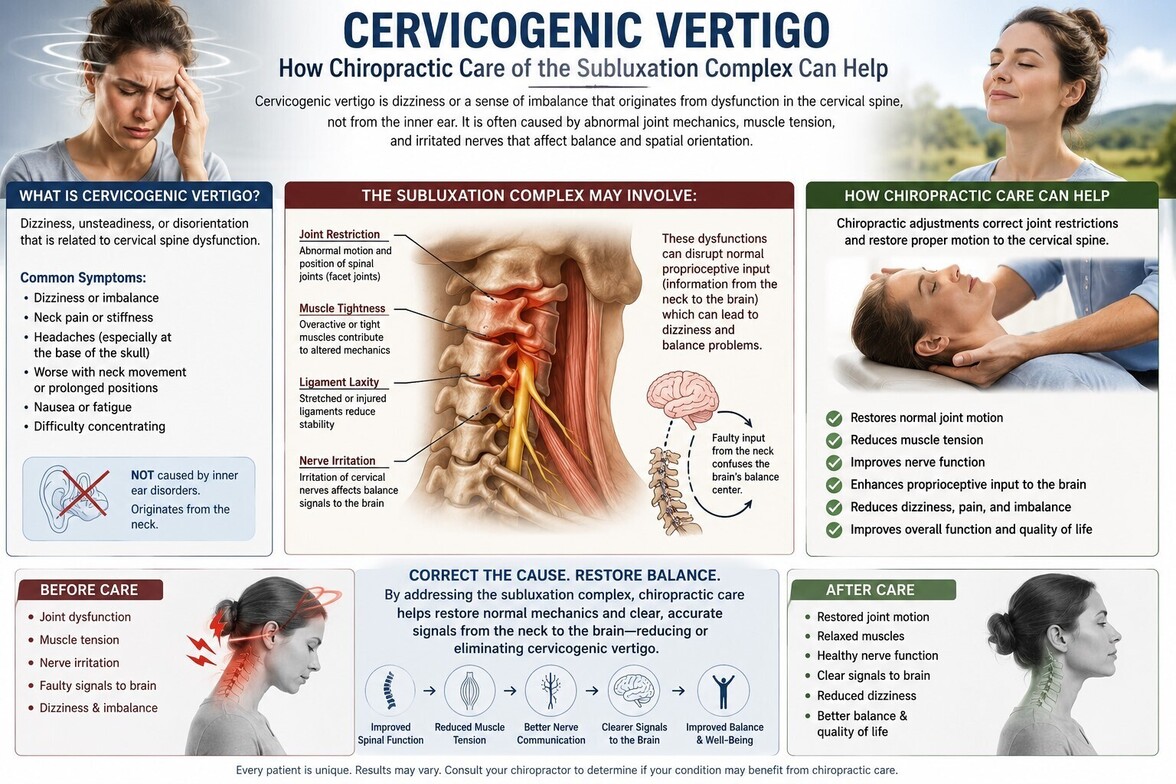
At Palmer Chiropractic in Richmond Hill, Georgia, we often meet patients who describe feeling dizzy, lightheaded, unsteady, or as though the room is moving around them. While many cases of vertigo originate from the inner ear, research has shown that some forms of dizziness may be related to problems within the neck itself, a condition commonly referred to as cervicogenic dizziness or cervicogenic vertigo. (PMC)
In conservative, subluxation-based chiropractic care, a vertebral subluxation is defined as a dysfunction of the spinal joints and surrounding tissues that may interfere with normal movement, nerve communication, and overall body function. When these spinal dysfunctions occur in the cervical spine (neck), they may contribute to altered sensory input between the neck, eyes, brain, and inner ear balance centers. Researchers have proposed that this mismatch of information can lead to symptoms such as dizziness, imbalance, and disorientation. (PMC)
A review published through the National Institutes of Health's PubMed Central explains that cervicogenic dizziness is commonly associated with neck pain, restricted neck motion, and symptoms that worsen with certain head or neck movements. The authors note that disturbances in cervical proprioception—the body's awareness of head and neck position—may contribute to feelings of dizziness and disequilibrium. (PMC)
Another NIH-indexed review found that dysfunction of the upper cervical spine can create abnormal signals to the vestibular system, the part of the nervous system responsible for balance. This altered communication may result in dizziness even when no inner-ear disorder is present. (PMC)
Research published in Medicina further describes how poor posture, forward head carriage, and dysfunction of the small muscles at the base of the skull can influence sensory information sent to the brain, potentially contributing to cervicogenic dizziness symptoms. (PMC)
Additionally, a systematic review examining patients with cervicogenic dizziness found that neck pain and dizziness frequently occur together and that symptoms often improve when the underlying cervical dysfunction is addressed. (PMC)
At Palmer Chiropractic, our focus is not on treating vertigo directly. Instead, we evaluate the spine for vertebral subluxations and areas of restricted motion that may affect normal nervous system function. Through specific chiropractic adjustments, we work to restore proper spinal movement and support the body's natural ability to maintain balance and coordination.
Every patient receives a thorough history and examination. Because dizziness can have many causes—including inner ear disorders, neurological conditions, cardiovascular issues, and medication side effects—we may recommend additional medical evaluation when appropriate. Cervicogenic dizziness is generally considered a diagnosis of exclusion, meaning other potential causes should be ruled out first. (PMC)
Whether you are experiencing occasional dizziness, chronic neck tension, headaches, or balance concerns, Palmer Chiropractic provides conservative, family-centered chiropractic care for patients of all ages. Our goal is to help restore proper spinal function, improve overall health, and support your body's God-given ability to heal and adapt naturally.
References
-
How to Diagnose Cervicogenic Dizziness (PubMed Central)
-
Upper Cervical Spine Dysfunction and Dizziness (PubMed Central)
-
Cervicogenic Dizziness Review (PubMed Central)
-
Suboccipital Muscles, Forward Head Posture, and Cervicogenic Dizziness (PubMed Central):
-
Clinical Characteristics in Patients with Cervicogenic Dizziness: A Systematic Review (PubMed Central):
Note: This content is educational and should not be interpreted as a claim that chiropractic care cures or treats vertigo. Patients experiencing new, severe, or unexplained dizziness should seek appropriate medical evaluation.
Trace Palmer
Contact Me